Unified Medical Records System Needed to Save Money

According to Dr. Kevin Pho of KevinMD dot com, and Health Affairs, doctors who use electronic medical records in systems that were fragmented actually ordered more tests than those who used paper records. It was only those who were in large systems that realized money savings. According to Pho:

Aside from large integrated systems, like Kaiser Permanente in California and the Veteran’s Administration, most physician practices adopt different EMRs. And in many cases they don’t talk to one another. So, a physician’s record may not able to able to access notes from his local hospital if they used different systems. Some doctors in that situation may simply re-order a test, rather than go through the time of obtaining the records from the hospital.

This also from Pho:

The true power of digital records come when using a single, unified system that can be accessed by different health venues. With the exception of large integrated health systems, we have mostly have a mess of siloed, fragmented EMRs. Perhaps with the consolidation health reform is instigating, more doctors will be able to practice under a unified EMR, which then would realize more cost savings. But until that happens, EMR evangelists who promise lower costs may find their expectations cut drastically short.


Tenth Dems and WCPT Radio To Host Live Candidate Forum

Join Tenth Dems, WCPT, and the four candidates who have agreed to participate in a candidate forum—Vivek Bavda, Brad Schneider, Ilya Sheyman, and John Tree—on Saturday, Feb. 25, at 1 p.m. Deerfield Hyatt. The live, on-air candidate forum will be moderated by veteran Chicago political journalist Dick Kay.

10th Congressional debate in 2010 draws packed house

The Tenth Dems debate in 2010 drew a packed house.

With primaries around the corner, 10th Congressional District voters have a real choice to make between four Democratic hopefuls. To help voters decide, Tenth Congressional District Democrats (Tenth Dems) and WCPT-AM/FM radio are hosting the forum, slated for Saturday, February 25, 2012, starting at 1 p.m. at the Deerfield Hyatt, 1750 Lake Cook Road, Deerfield, IL, 60015. The four candidates who have agreed to participate in the forum are Vivek Bavda, Brad Schneider, Ilya Sheyman, and John Tree. Advance registration is not required, but space is limited and if attendance exceeds the capacity of the room, priority will be given to those who register in advance. Admission is free and doors open at 12:30 p.m. The broadcast will begin promptly at 1 p.m. The forum will be broadcast live on WCPT-AM/FM radio stations: 820 AM, 92.5 FM, 92.7 FM and 99.9 FM.

The candidates will sit down with Kay for a lively conversation on the issues critical to this year’s primary. There will be no podiums or time limits, but there will be plenty of chances for the candidates to talk with, question, and respond to each other.

For the past four decades, Kay has been one of the leading voices in Chicago political journalism. In his long and distinguished broadcasting career, he has reported on virtually every significant local and national political event. He also hosted “City Desk,” WMAQ-TV’s respected political program. He currently hosts the weekly talk radio show “Back on the Beat” on WCPT-AM/FM Saturdays from 1:00 to 4:00 p.m., which will be the venue for this candidate forum.

While some organizations restrict the use of campaign materials during debates, Tenth Dems encourages you to display your buttons, banners, T-shirts literature and other paraphernalia throughout the event.

For more info, click here, call 847-266-VOTE (8683), or send us an email.


-30-

Analytics, Marketing, Habits, Targeting All in One Place

How Companies Learn Your Secrets from the New York Times Magazineis a must-read for anyone who is interested in analytics, marketing, how to lose weight, how to save money, Big Brother, and more. It’s all here.

Target Your Audience

Target Your Audience

For those interested in losing weight, the author imparts a great lesson in habit. It basically is cue, routine, then reward. Cue … some stimulus or call to action. Routine … going something the same way over and over again that becomes habit. Reward … some happy thing that happens at the end. To understand the habit loop, as author Charles Duhigg called it, is deeply ingrained in our brain, because it is a way for our brain to conserve energy from having to think through everything.

So, take a look at your bad habits. Try to figure them out, and you can fix them. … Yup.

But the crux of the article deals with habits, how we all fall into them, analytics of the data trail we all leave, and how we are targeted. We need to learn how to communicate effectively with our constituents, using analytics.

But here’s the deal. We need to be honest about analytics and targeting. Constituents may not like it, but they will like it less when we use analytics and targeting as effectively as we can.


Jeffrey Zaslow-Penned Column from 1986 Is Marvelous

This column written by Jeffrey Zaslow in 1986 is marvelous. Thanks to Ryan Ver Berkmoes for posting this for everyone to read. It is a shame that Mr. Zaslow has left us way too early.


Social Media: Lessons on How Socia Media Drives Communication

Delivering Key Message - Social Media

Delivering Key Message - Social Media

In my experience in communications, Social Media has enabled customers or constituents to get what they need in terms of content and use it to deliver value.

Of course, the important element in all this is to deliver your key message or messages in online media in various ways, with various content, again and again. You need to manage the content so that it supports products or services, channels or promotions.

The customer, the constituent, is now involved in the communication. Is this dangerous? Well, not really, if you believe in your message. And if you manage your message correctly. And if you understand that the risk in not being in the conversation–the Social Media space–is far greater than engaging in the conversation and getting your message across.

So you need to get buy-in. I’ve gotten buy-in from a few organizations for social media efforts. I didn’t do as an effective job as I should have, so I am researching how to do that better. Here’s a couple of things that I’ve found.

Gini Dietrich writes:

… I found Leading Change: Why Transformation Efforts Fail. [Note: this was a dead link] In the article, they cover eight steps for getting buy-in and managing change.

  1. Creating a sense of urgency
  2. Identifying a powerful guiding coalition
  3. Creating a vision
  4. Communication the vision
  5. Empowering others to act on the vision
  6. Planning for and creating short-term wins
  7. Consolidating improvements and producing still more change
  8. Institutionalizing new approaches

Another approach was from Caffelli, a Portland, Oregon, creative agency:

So stop thinking about a Twitter campaign, or a flash-in-the-pan interaction. Start thinking about a holistic communications [note: they said “marketing” but I think you can substitute “communications” easily] program that seamlessly integrates social media—that is truly what get their attention.

So … start the conversation. Get the buy in. Strategically deliver your key message. Over. And over. And over again.

Giants Yesterday & Today Book Reason I’m Picking G-Men

pau1ke11y New York Giants Yesterday & Today

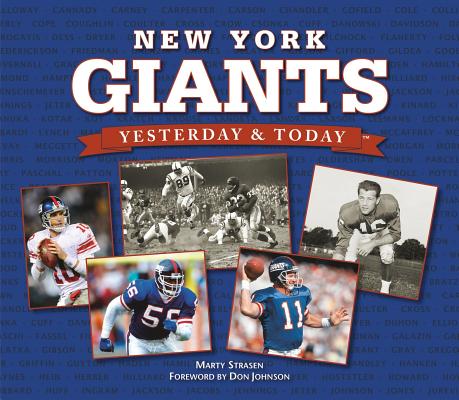
New York Giants Yesterday & Today … a book I edited a few years ago.

New York Giants Yesterday & Today is a book I edited a few years ago, and it is the reason that I’m picking the New York Giants to beat the New England Patriots.

Sure, I have no idea who is going to win the game. Based on the last matchup to feature these two teams, I would say the Giants are slightly better than they were in Super Bowl 42, and the Patriots are worse. But that really doesn’t matter all that much.

Who will be ready for today’s game? Well, if the G-Men were smart, they would pick up a copy of New York Giants Yesterday & Today and see how the SB 42 Giants prepared against the then-18-0 Pats.

Impartiality as the Message


Impartiality in the primary Tenth Dems pau1ke11y

Impartiality in the primary

Impartiality was the key message of a press release and blog post I wrote for the Tenth Dems. It is a tough message to work on.

Messaging is usually aligned with passion, or at least enthusiasm. This message was about, well, a more cool detachment. That, to me, is a tough sell.

But the message was important to our organization. One key challenge we have as a group is that in a primary, the organization is accused of bias for one candidate or another. Sometimes, the actions of key members of our group can provoke outrage from some of the campaigns. And we really want a Democrat to win in November, so we want the process to play out during the primary season. Impartiality is not an easy message to get excited about, but it is important to Tenth Dems now.

I tried to use some humor to put across the impartiality message.

In fact, the term “smoke-filled room” came from the nomination of a Republican who is widely considered to be one of the worst presidents in history. While he was a bumbling and ineffective leader, members of his administration by and large gave away huge amounts of the country’s petroleum reserve to Big Oil, profiting themselves in the process. While you might have had another name in mind, that president was Warren G. Harding.

Did it work? I hope so.

Well, read the rest of the piece and let me know.

Thanks,

pk